One of the most irritating rants I go on is about how ecologically impoverished the UK is. In America, it's not hard to find a mixed forest on the edge of many towns. In Scotland, finding a healthy-seeming forest requires Internet research and a long pilgrimage.
The other weekend I pilgrimaged to the Carrifran Woodland in southwest Scotland, where conservationists are experimenting with one valley in the Moffat hills. They've planted 500,000 native species of tree and shrub within 1,600 acres, with the idea of showing what an ecologically-restored Scotland might look like. They are twenty years into the project, so the trees are not tall, but when you walk over the land, you get a sense of the project's potential, even during a time of year when the forest has sunk into its winter slumber.
Take a close look at this next picture.
There's a lot to unpack in the above picture. Look at the far hill in front of us. There, you'll see a forest on the left half of the hill and grassy vegetation on the right side of the hill. This picture tells us so much about Scottish ecology and the lack thereof. The forest on the hill is probably made up entirely of "Sitka Spruce," a non-native species which is being grown for timber. These forests are not really forests--they're typically monocultures that have almost nothing residing within them. The forest does show, however, that forests CAN grow in Scotland, even up and over hills. Now look at the bare side of the hill on the right. This moorland terrain used to seem beautiful to me, until I learned that it isn't naturally desolate. It is actually a human-created wasteland. The only reason that hill is bare is because there is an overabundance of deer and sheep which nibble any and all saplings to death. Walk on that bare hill and then walk through the Sitka Spruce forest and you'll be disturbed to realize that it is ecologically impoverished, with few birds, bugs, plants, and animals.
Now look at the shadowy forest in the foreground. This is Carrifran Wildwood, where most all of the trees have been hand-planted with a variety of tree species, and where sheep and deer are discouraged from entering. This piece of land, when it comes of age, might show us what Scotland could look like if it's managed until it doesn't need to be managed.
It appears that Biden, now that he’s secured Wisconsin and Michigan, will win. What relief I feel is dampened by:
1. the fact that Trump will use all the dark arts at his disposal to corrupt the election, meaning that we’ll, at best, have months of unpleasant post-election drama to suffer through.
2. the fact that the Senate seems like it'll be controlled by Republicans, meaning that, for the next 2-4 years, we'll have to deal with the same old legislative logjams and political rancor.
3. the fact that the Supreme Court will be dominated by conservatives.
4. the fact that this election does not sound the death knell for the Republican Party as we know it. The Party will be less inclined to modernize and clean up its image. Trumpism may well last beyond Trump.
5. the fact that, from 2021-2024, there likely won’t be an ambitious or productive legislative agenda. Just more of the same nonsense where Democrats try and Republicans obstruct.
6. and, worst of all, the fact that almost 50% of the voting public voted again for one of the most rotten, corrupt, untrustworthy, and incompetent conmen who’s ever played American politics. I find this disturbing. I might give the 2016 “blow it up” voters a pass, but these 2020 voters ought to know better. It’s cliche to say that one has lost his faith in humanity, but my faith is truly being tested, even with Biden ahead. I can still think America is a wonderful country knowing that there are a handful of KKK cells out there. No country is perfect and there will always be bad apples. But knowing that half of the voting Americans have learned nothing from the last four years makes me think the bulk of us are either politically deranged, tragically uninformed, or morally stupid. It is harder for me to love my country knowing that almost half of its voters have voted for someone who is, among a thousand other offenses, trying to corrupt an election and corrode all that’s good about our democracy. Why isn’t this offense enough to turn on him?
Lastly... I’m hoping that we all (and I'm including Trump’s supporters in "we all") have reached a point of exhaustion with Trump. I halfheartedly predict that his yammerings and tweets will burn out like a fire without oxygen. We just don't have the energy to pay attention to him anymore. His disappearance will be nice, but there is nothing about the next term that excites me. All of this makes me want to go on a vacation from political news for the next four years.
Some men like Trump because they think he’s “manly.” (Click for NYT story about why many Latino men are drawn to Trump’s machismo.) What grotesque understanding of manliness are such men evaluating him with? Can’t they see that Trump — who whines about “unfair” questions, who walks out of a tough interview, who constantly displays toddler-like petulance, who exhibits no impulse control, and who weakly hints at his impending defeat — fails to meet any traditional criterion of admirable masculinity?
One thought that keeps coming to my mind is: Haven’t these admirers ever played sports?
I played hockey and football from my early youth up until college. They were tough, violent sports that presented all sorts of intra- and interpersonal challenges. No matter the challenge, we were taught by our coaches to never whine, to never brag, to take personal responsibility for your mistakes, to support your teammates, to be gracious in victory or defeat, and to play to the last whistle even when the game was lost. We were by no means a brotherhood of principled Spartan soldiers; a lot of my teammates fell short of living up to these virtues, but no one disputed the worthiness of these virtues, and our coaches, to their credit, tirelessly reinforced them from year to year.
All of the above are not necessarily “manly” values because women embrace them just as well. But if we as a society are going to have vaguely tailored values for boys and men (and I don’t see why we shouldn’t), let’s get them right. No vision of ideal manliness should involve the ignoring of rules, the unscrupulous taking of what you want, and the putting on of a “strongman” front. Rather, it would be better to cultivate and practice:
stoic self-control (which doesn’t preclude emotional availability) protection of those in need resilience physical courage moral fortitude worldliness humility self-examination awareness of and determination to manage one’s flaws and the responsibility to serve our families, communities, and beyond
We should look up to, celebrate, and vote for people who possess these values because these are not only pro-social, but because they take work and discipline to attain. Humiliating your wife via an affair or walking out on an interview are easy because you’re acting on destructive impulse alone. It takes a cultivated and disciplined adult to weather a tough interview or manage unruly instincts.
I wish to put it more coarsely: If you like that whiny man-baby because you think he’s a strong man, you have a primitive understanding of what strength is and what an adult ought to be.
I give the first episode of Showtime's The Good Lord Bird a C+.
I've been patiently waiting for fifteen years for a John Brown show/movie, and finally Showtime is featuring the adaptation of a James McBride book.
You can tell Ethan Hawke has fun with the full-throated Jeremiads (and what actor wouldn't?), but they're used too often when they could have been used to greater effect if used sparingly (think Samuel L. Jackson in Pulp Fiction). Hawke is one of my favorite actors, but he's too young to play Brown. Physical comedy is not Hawke's strong suit, and everything about the depiction feels excessive. I would have preferred a younger Robert Duvall.
I can handle a little teasing of John Brown, but he's almost completely depicted as incompetent, foolish, zealous, or insane. For his first depiction on the screen, I would have liked to see a bit of nuanced reverence. The book Cloudsplitter (which I highly recommend) did better to capture Brown's moral ferocity and amusing radicality. Same with Tony Horwitz's Midnight Rising (also excellent).
Overall, the acting is largely poor; the action is choppy, unrealistic, and forgettable; and the script feels oddly rushed, even though they had plenty of space to tell the story. I don't have much hope for the rest of the series. What a waste.
I've lived all of my adult life in the U.S., except for the past two years when I've mostly lived in Scotland. It's probably safe to list Scotland, and the greater United Kingdom, as a "socialist" country, at least compared to the U.S.
[One note about terminology: "Social capitalism," "democratic socialism," or "social market economy" might be better terms because "socialism" may conjure images of the failed and undemocratic puppet governments of the USSR. Nevertheless, it appears we Americans are stuck with "socialism" as the primary term to describe a social democracy, but bear in mind, when I use it, I'm using it with a country like Denmark or Scotland in mind, not the GDR or Venezuela.]
As a dual U.S.-U.K citizen who has sipped the poisons of European socialism, I may have useful insights into the evils that may come to America, championed by the likes of Bernie Sanders and the left wing of the Democratic Party.
Evil #1: Universal Health Care
In October 2019, my daughter was born via C-section in the Royal Infirmary in Edinburgh, where, under the NHS system, we didn't have one bill apart from one non-essential test around the third month of pregnancy that I paid for out of pocket. Apart from that $600 test, my child was born for free. The quality of care was excellent: prenatal classes, five nights in the hospital, health visitors who come to our flat and check up on the baby, etc. The Scottish government mailed a “baby box” to us, which includes useful items such as clothes, a teething ring, and a changing mat. The box comes with a foam mattress and doubles as a crib.
I have been healthy these past two years, but I did have a brief check-up for something small. It took me about two-to-three days from requesting the appointment to seeing the doctor. I got a free prescription for a pill at the pharmacy. And I've received a free eye exam and I have a free dental visit scheduled.
Let's compare my U.K. experiences to what I would have experienced in the U.S. In the state of NY, a C-section WITH insurance would have cost $12,000. WITHOUT insurance it would have cost $22,000. Check here for your state's cost of delivering a baby. Under the horribly treated and much maligned Affordable Care Act (which, to be fair, never went far enough), I pay $35 a month for my subsidized NY State health insurance (great!), but this health insurance covers nothing, and I have an in-state deductible of over $7,000, meaning that I will receive no discount on medical bills until I pay over $7,000 in medical bills (not great…).
Evil #2: Maternity Leave
Scotland gave my wife one-year of maternity leave. For the first six weeks, she got 90% of her usual income. For the next thirty-three weeks, she got a check for $200 a week. The final thirteen weeks are unpaid. This is voluntary, of course. She could have chosen to go back to work after a few weeks after the birth.
The U.S. has no universal maternity leave legislation, meaning some moms get no paid leave. The inadequate Family and Medical Leave Act gives mothers twelve weeks of unpaid maternity leave. But this is only given to mothers who work for companies that have more than fifty employees and who've worked for the company for 1,250 hours and a full year. Some states, like New York, have their own maternity leave laws. New York, which has one of the more generous systems, offers ten weeks of family leave, granting a parent with 60% of their usual pay.
Scotland's maternity leave system is actually pretty weak when compared to other European countries. Estonia, for instance, offers eighty-four weeks of maternity leave with full pay. In Germany, a mother can be on family leave and hold her job position for three years (though she won't be receiving full pay for those three years).
Evil #3: Early Education
Scotland increased the amount of free early education for three and four year olds from 600 hours to 1,140 hours a year (or about thirty hours a week during the school year). National U.K. policies provide early education (from age three up until proper school age) to 73% of U.K. children. That's low when compared to countries like Sweden, Iceland, Spain, and Belgium where virtually all young kids are given free early education.
Only Florida, Georgia, and Oklahoma have universal Pre-K education. Research on Pre-K education has shown the kids enrolled in Pre-K experience, later in life, fewer arrests, fewer substance abuse problems, better graduation rates, and they're more likely to attend and complete college.
Evil #4: Child Benefit Assistance
Parents in the U.K. get about $30 a week to help with new costs, like nappies, food, whatever. You’re given about $20 for each additional child. My brothers- and sisters-in-law in Germany get $240 per child a month. As you have more kids, you get more money. For your fourth child, the German government will give you $275 a month. (A parent of four kids in Germany will be bringing in close to $1,000 a month just from these child payments.)
To my knowledge, no such program exists in the U.S., but there is a U.S. tax benefit for taxpayers with dependent children.
Evil #5: Free college tuition
If my daughter attends a Scottish university, she won't have to pay any tuition. The situation isn't perfect. Students still have to pay for living costs. Denmark, according to this 2015 article, provides free tuition AND $900 a month to students to cover living costs. In Germany, education is free and interest-free loans are given to low-income people. They do not have to pay their debts until they begin earning a reasonable sum.
In the U.S., data shows that the average student debt is about $30,000. I, for instance, had to pay $35,000 in student debt for my American education.
Evil #6: Senior benefits
At age sixty, Scots get free bus passes, which is a bigger perk than you may realize, given how much more U.K. people rely on public transport than U.S. folks. Pension benefits begin at age sixty-six, when you'll receive $175 a week, though I understand that can be higher or lower depending on your contributions.
Evil #7: Paid Leave
U.K. workers get twenty-eight days of paid leave a year. In the U.S., there is no national law guaranteeing paid vacation or paid holidays to workers. Some U.S. companies offer paid leave, of course, but how many days is up to the company. U.S. companies will, on average, provide twenty paid vacation days to people who’ve worked for the company for twenty years. For people starting off at their new job, it’s ten days.
Evil #8: The Right to Roam
Roaming in Scotland
The right to roam isn't necessarily a socialist policy, but socialist countries tend to generously open up the country for public recreation. Scotland, in 2003, passed the Land Reform (Scotland) Act, which opened up virtually all Scottish lands and waters (including private lands and waters) for responsible recreation. Countries such as Norway, Sweden, and Finland have equivalent systems. Countries like Germany provide access to woods and around agricultural fields, though camping is not permitted everywhere. I use this evil all the time.
Evil #9: Manageable cell phone and broadband costs
One of the things that drives me nuts about the U.S. is how there are no truly useful budget mobile data plans. In the U.S., I pay $44 a month for 10GB at T-Mobile. In the U.K., I pay $22 a month for 10GB with O2. Click here to look up countries ranked by cost of mobile data.
As for broadband, I pay $22 a month in the U.K. In the U.S., the average broadband cost appears to be more like $60 a month.
Evil #10: State-owned industry
One thing conservatives love to do is discredit state-owned industry by pointing to failed states like Venezuela. Fair enough, but they conveniently leave out Norway, which took ownership of the oil and gas industry decades ago. Revenue from the industry goes into a $1.1 trillion wealth fund that supports welfare projects. This may sound too radical for Americans, but the conservative state of Alaska has a similar policy for its oil and gas industry. Every year, every Alaskan gets a dividend from between $1,000 and $2,000.
Evil #11: Reasonable taxes
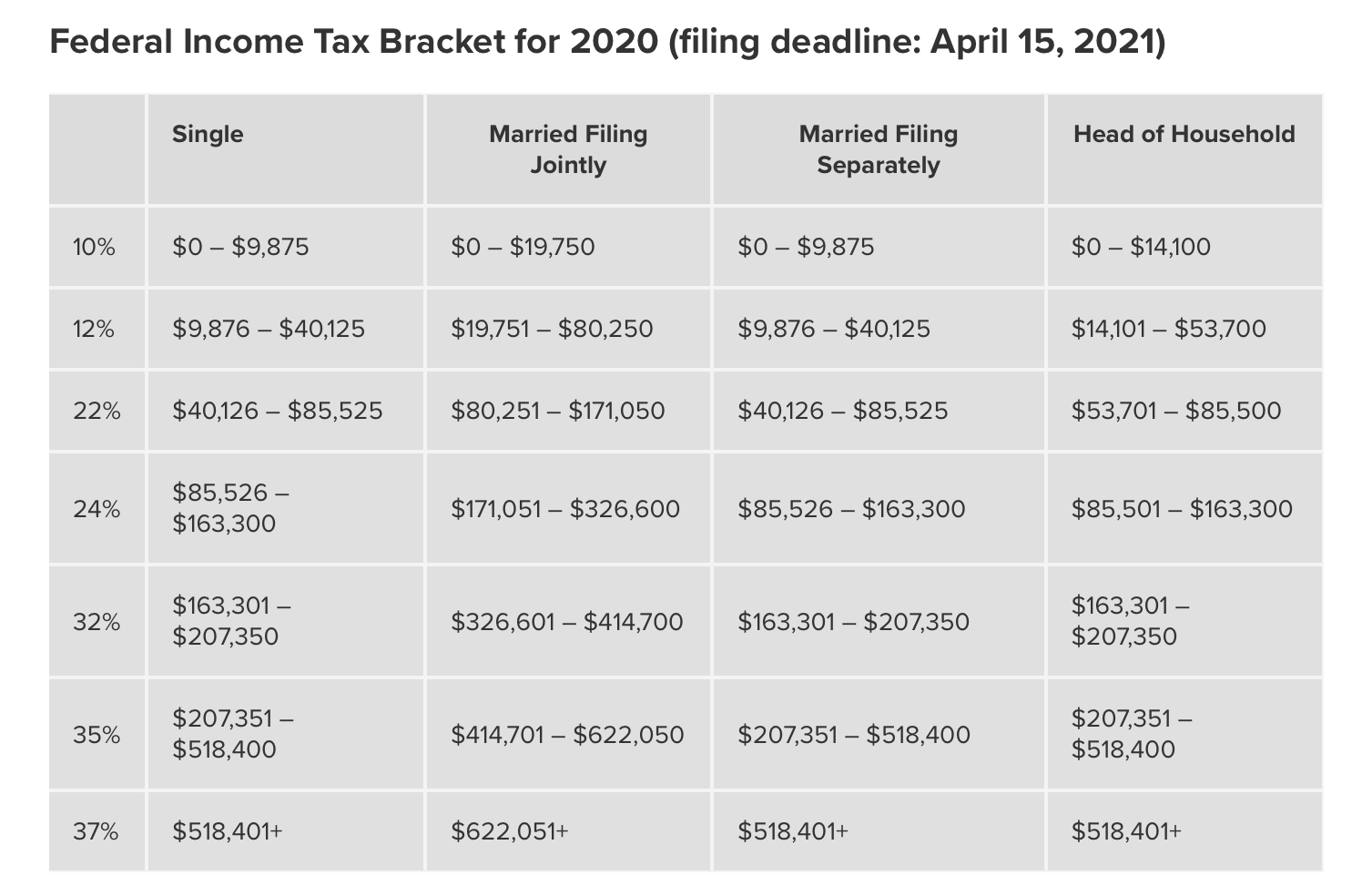
None of the above benefits are free. They're paid for by taxes. You might assume your tax bills would be devastatingly high with all these generous programs (and they can be high for the well-off), but they're quite manageable for the average earner. For someone who earns around $40,000, like myself, I’ll be paying a Scottish income tax rate of 21%. In the U.S., it’d be 22%. in other words, I’d pay MORE in the U.S. It must be said that if you’re a Scot who earns more than $57,000, then you will have higher taxes than an American who earns that same income.
U.S. income tax rate 2020
Scottish income tax rate 2020
Evil #12: Prosperity for all
The World Economic Forum publishes an annual list of countries, ranking them on "global competitiveness.” Check out the Top-50 countries on this list (page xiii). These Top-50 are dominated by all of these European socialist countries. Or consider “social mobility,” which describes the ease at which an individual can climb the socio-economic ladder. According to the World Economic Forum, the most mobile countries are European social democracies. The U.S. is ranked at #27.
World Economic Forum, social mobility rankings
Honorable mention evils
There are probably so many benefits that I'm unaware of. There are no doubt benefits for the disabled, kids with learning disorders, senior citizens, and for arts funding. My sister in law, who works in Luxembourg, tells me that she gets roughly $700 a month in child payments for her two kids, plus additional money for school supplies. Child care is free for children between 2-6. Full pay was offered to her for four months during the pandemic lockdown. Fifty free face masks were provided to her family, plus vouchers to stay in a hotel to perk up the tourism industry. There are probably a thousand other small things like this that are under my radar.
***
All nonsense aside, I've experienced and benefited from at least six of these benefits in just my two years of on-again-off-again living in Scotland. There is so much I miss about the U.S.: the wildlife, the wild forests, the toilets that flush, the everyday cheeriness of its people, and my social connections. But there are times when I think: Why would I ever go back?
Health care, maternity leave, free education, a right to roam: these are serious life-enhancing benefits that have, for me, reduced stress and anxiety. They’ve made life easier and better. I’d think twice before giving them up.