The Sea, the Sea by Iris Murdoch (1978, *audio*) I’m not sure if The Sea, the Sea is a good book. It’s a haphazard, crazy, bonkers book. It felt as if Murdoch was making it up as she was going along. But sometimes a story is worthy if it’s simply an entertaining ride, and The Sea, the Sea may have been my most enjoyable audiobook experience ever. The book is fun and ridiculous and atmospheric. But most of the praise should go to actor Richard Grant for his astounding voice acting performance. If there’s an annual best “narrator” award for audiobook narrators, it ought to have gone to Grant.
The Buried Giant by Kazuo Ishiguro (2015) This is a book about an epidemic of memory loss in a post-war Arthurian Britain. I admire Ishiguro for cheekily playing with Arthurian legends—Merlin may have been engaged in dark sorcery; Arthur may have sought peace via brutal means; Sir Gawain wrestles with internal demons from his warring past. The book brought to mind the Rwandan genocide, in which one ethnicity vied against the other. (The Buried Giant is about the aftermath of the Briton-Saxon wars.) Memories breed anger which breeds revenge, and the violent cycle continues. One can imagine how forgetfulness can be a salutary disease under such circumstances, and I like how Ishiguro played with these themes. The “buried giant” — you could say — was simply the memory of the war atrocities that would, if unearthed, wreak havoc on Britain.
The Remains of the Day by Kazuo Ishiguro (1989) One of my favorite things about this book is how flawed Stevens, a self-denying English butler, is as the narrator. There is something boyish and endearing, if pathetic, about how persistently self-deluding Stevens is. Once you see this as a reader, the reading experience changes, because you can now see through Stevens and begin to tease out the truth for yourself.
Beverly by Nick Drasno (2016) I love Drasno’s two graphic novels, set in Anywhere, USA. The illustrations are likely deliberately bland: blank expressions, boring bodies, neat suburbs, and undecorated interiors. It all suggests a lack of spiritual richness in the characters’ lives. These characters are victims of a soulless and impoverished American culture: bad TV, recreational binge drinking, advertisements everywhere, media-generated paranoia…These characters seem to be wandering through these boring landscapes, searching, but rarely finding, connection or understanding. It all sounds so dreary, but there’s humor on every page. Drasno’s books are some of the best critiques — or diagnoses — of American culture, and the alienation, loneliness, and “something’s missingness” so many of us feel.
Gotta Get Theroux This by Louis Theroux (2019, *audio*) I’ve long been a big fan of Theroux. There’s a casual wisdom in this memoir, which covers everything from boyhood, to marriage, to his career. (It’s mostly about his career.) He spends an inordinate amount of time on his interviews with Jimmy Saville (who later turned out to be a serial pedophile), but I found myself enjoying this theme, and I suppose the continual fascination with the subject says something about Theroux. I strongly recommend the audio version, as Theroux is a gifted speaker.
Warrior (2011, USA) I am no fan of MMA, but the acting from the three leads (Tom Hardy, Joel Edgerton, and Nick Nolte) was exceptional enough to make me overlook all of the sport's unsavory barbarism. It’s not normal when the “final game” scene in a sports movie is unpredictable. Yet this scene was. I might go as far to say that the ending was not only the greatest sports movie ending, but the greatest ending of any movie ever.
Honeyland (2019, Macedonia) Beautiful documentary about beekeepers in rural Macedonia. Documentaries often have to stray from conventional storytelling structure because the filmmaker can only work with whatever content they have on film. So I was impressed with how novelistic this documentary felt. It was as if these real people were acting out a beautifully written story that fits together so perfectly it could only be fiction.
Margaret (2011, USA) This was my Kenneth Lonergan year. I’m embarrassed that I’ve long overlooked one of the great American writer-directors. I came across Margaret on Richard Brody’s (of The New Yorker) “best films of the 2010s” list. Margaret certainly belongs.
You Can Count on Me (2000, USA) Another Kenneth Lonergan film inhabited by characters with punchy East Coast attitudes and soft souls.
A Star Is Born (2018, USA) There is nothing about this movie's plot (alcoholic country musician falls in love and is tempted to reform) that intrigued me, but I found no reason to discontinue watching. By the end, I had to grudgingly admit that I loved the movie. The best thing the movie had going for it, in addition to Bradley Cooper's performance, were the musical performances in front of real and huge audiences. It was easy to feel the energy of the actors/musicians on a stage in front of real crowds.
Nomadland (2020, USA) I thought Zhao captured the vandwelling lifestyle wonderfully—everything from impromptu bathroom emergencies, to worrying about people harassing you, and to feeling snug under your covers as rain gently drums against the van's metal roof. I hope Zhao, who recently directed a superhero movie, goes back to making movies about the unseen peoples of America.
Dune (2021, USA) My main gripe about Dune is that the filmmakers did nothing to freshen up Herbert's writing. Herbert lacks a sort of earthy humor and wit that George R.R. Martin has in abundance. Why not hire a few good writers to lighten up a few scenes with a touch of humor? Or just make the writing feel less stilted? Weaknesses aside, Dune was a visual spectacle with some of the most inventive world-building we've seen in film: from the moisture-proof suits, to the cool ships, to the body armor, to the curvy sand dunes, to the costumes. Plus, some of the actors were all-in on their characters, such as Stellan Skarsgård as the creepy Harkonnen floating guy, and I thought Paul's mother (Rebecca Ferguson) gave a strange and outstanding performance. (It was nice to see a mom run like an Olympic sprinter.) I was completely immersed in this fictional world, but the movie didn’t stick to my ribs. It left my system as soon as I left the theater; my only remaining impression is of the terrific visuals.
Paper Moon (1973, USA) The writing remains funny and sharp for a movie from 1973. I have a little girl now, making me a sucker for father-daughter movies. (I just watched the trailer to Father of the Bride and teared up.) I agree that Tatum O’Neal’s performance belongs in the “best kid actor performance ever” conversation.
An Officer and a Gentleman (1982, USA) I’m surprised this movie hasn’t experienced a second life with the Millennial generation, as I found so much of the story relevant to the 21st Century dating scene. The two male protagonists, who are officers in training at a miltary base, must morally navigate their "flings" with local working-class women. They must determine if and how to end things. This is something that young folks, who are serial-dating with apps like Tinder or Bumble, must deal with all the time.
Manchester by the Sea (2016, USA) I watched this shortly after it came out on video years ago, and I found the movie forcefully melancholic and the dialogue inauthentically folksy. But after watching and loving Lonergan’s two other films, I had to revisit Manchester by the Sea. I can’t think of another re-watch in which my opinion had flipped so significantly. This time around, it was easy for me to appreciate the subtle humor, the folksy (but not inauthentic) dialogue, and Casey Affleck’s outstanding performance as a man whose life-spirit has almost been drained by grief.
Another Round (2020, Denmark) A group of male friends getting drunk every day at work as a philosophical and existential exercise sounds like a bad Seth Rogan/Jud Apatow movie, but Another Round succeeds in Thomas Vinterberg's hands. (See also, The Hunt.) Despite the silly premise, it's ultimately a serious movie about reinventing yourself, escaping middle-age torpor, and seeking to reclaim a vivacious life.
The Father (2020, France, UK) I loved Nomadland and it was a good-enough selection for Best Picture at the Oscars, but I think we’ll remember The Father as the better movie in 25 years, helped by some exquisite film editing. It is hands down the most accurate and artistic cinematic depiction of memory loss. Hopkins’s final scene is one of his greatest.
Honorable mentions The Sound of Metal (2019, USA) Borat II (2020, USA) The Nest (2020, UK) First Cow (2019, USA) Minari (2020, USA) The Sisters Brothers (2018, France, USA)
I have the cover story for National Parks Magazine this month. The story is about my summer living among grizzly bears in southern Alaska. I titled it "Out of the Wild," a playful allusion to Krakauer's "Into the Wild." There are many stories that call us to be "Wild," to go "Into the Wild," or to heed the "Call of the Wild," but there aren't any to my knowledge that call for you to leave the wild and live a, well, more normal life. Perhaps that's a less exciting story, but it's an honest one and probably a common one, and therefore it ought to be explored and told. My story is about how a bunch of bears, and the many shortcomings of the seasonal itinerant life (no place to call home, weak relationships, unclear life direction), led one man to say goodbye to Alaska. (For now...)
"That summer in Lake Clark National Park, I went into the wilderness, and the wilderness told me to leave. Sometimes the right journey isn’t to venture into the wild, but out of it."
When I saw The Rider (2017) by Chloe Zhao (now 39), I was amazed that a young Chinese person (with less than 20 years of experience in the U.S., and most of that time spent in culturally elite milieus and/or coastal metropolises) could so vividly and accurately portray the working-class in The American West, which is a region many Americans themselves are unfamiliar with.
How did she do it? The details in speech, atmosphere, and vocation were so spot on and precise. How does she get non-actors to act... pretty damn well? She made me think of Nabokov or Conrad, who wrote English masterfully despite not becoming familiar with the language until well into adulthood. That level of mastery, without the head start, is just, well, unfair. You wouldn't be mistaken if you detect the slightest hint of envy, but it's also hard to be envious of superlative talent.
I watched Nomadland last night, which didn't disappoint. It's the rare Best Picture winner that I think the Academy got right. Or right enough.
I lived in my van for two years, though in less rugged circumstances than Fern, played by Frances McDormand. Fern had to use a bucket as a toilet, work jobs for low pay, and move her van according to the seasons. Me, on the other hand... I lived on a college campus, which had every convenience I could desire within a short walk.
Anywho... I thought Zhao captured the vandwelling lifestyle wonderfully--everything from impromptu bathroom emergencies, to worrying about people harassing you, and to feeling snug under your covers as rain gently drums against the van's metal roof. I've read a few think pieces about how Nomadland delivers a cutting critique of 21st Century American capitalism. Okay, but let's not forget that Fern was a restless soul who craved her own company. The movie makes it clear that she had the option to take on a more comfortable lifestyle, but she voluntarily chose the thornier path. The scene I identified with most was the one where she was offered a big comfy bed in a room of her own on a farm. Yet she leaves the room and sleeps in her van. I remember that feeling. It's not just the coziness of your enclosed space, and its delightful mix of cold air and warm sleeping bag. Your van feels like a kind of pet, and you feel like it's wrong to leave it outside, all alone. In the van, you feel closer to the natural world. You don't feel the need to stifle snores or wake up at a respectable hour. Really, you just feel free in your little tin shell. Fern wasn't rundown by the system. Nor was she running. She was just happier alone. That's my take.
Last year, I was disappointed to learn that Zhao signed on to direct a superhero movie after the critical success of The Rider. A comic book movie plays to none of her strengths (capturing moody landscapes, drawing authentic performances from non-actors, and having characters engage in openhearted dialogue). How will she pull that off with Marvel characters for a general movie-going audience hungry for winky one-liners and CGI explosions?
When I read about the superhero movie, I thought she was doing it for the money (understandably so, given how little her first two movies made). If she could go back in time, I wonder if she'd still sign up for a superhero movie knowing that Nomadland would win the Oscar and open a lot of doors. My hope is that Eternals will be an interesting mistake, she'll cash her check, and Zhao will go back to making interesting stories about everyday people in America, set in lands in between NYC and LA. God knows we don't need more stories about writers, actors, and musicians.
The Rise and Fall of the Third Reich by William Shirer (1960) This is one of the best history books I've ever read. It relies almost entirely on primary documents (speeches, letters, etc.). I appreciated how there was no cautiousness in Shirer's style; Shirer writes clean prose with moral ferocity. There's no vacillating university relativism here. It's not a dry read by any means. It reads like a thrilling war movie that ends happily ever after.
Machines like Me by Ian McEwan (2019). This is a relationship novel more than anything, and there are a lot of funny and insightful things about the romance. But I was in it for the robot. I greatly enjoyed all the ethical questions the book explores, though I thought Adam, the robot, sometimes was powered off too much so the kitchen sink drama could play out. McEwan's smart prose makes up for any deficiencies in the plot. The counterfactual history (with a thriving Alan Turing) was a lot of fun.
Heimat by Nora Krug (2019). This is a delightful book that's admirably researched. Krug reflects on her Germanness, and how she grapples with the complicated history of her wartime family.
Walking the Great North Line by Robert Twigger (2020). This book goes to show that you don't need to walk around the world to write a good travel book. It's about Twigger's straight-line walk up England connecting weirdly aligned historic landmarks. The writing is fresh; there's something special on every page. Lots of honesty, history, humor, and hi-jinx: everything I love about the travel memoir genre.
"To develop that earlier thought about not starting at the beginning, there should be a word for the instinct to start things in a half-arsed fashion (Farsing? Harsing?), as if starting properly will jinx the enterprise, set it up on too high and unachievable a pedestal. The instinct to start in a half-arsed way for fear you'll never start at all."
Bushcraft by Mors Kochanski (1997). This past spring I got an email from a producer of the TV show, Alone, inviting me to apply to be a contestant. I'd never heard of the show, but I've since become a fan and have begun a multi-year project to apply, get on, and win. I have lots to learn! I've read about five bushcraft books this year, and this one is the best. Mors is meticulous and scientific. The illustrations are very helpful.
This Boy's Life by Tobias Wolff (1989) This is a memoir of a teenage boy written with the detail and dialogue of a novel. I compare it to another old favorite, Angela's Ashes, except that This Boy's Life takes place in 1950's America. No one has ever captured how a young teen acts without thinking as well as Wolff has. It's as if the boy fails to have any ability for self examination and awareness, which is probably how most of us existed in our youths. We just can't remember it. But someone Wolff, as an adult writer, not only remembers this, but, somewhere down the line, discovered his amazing powers for intrapersonal intelligence. The De Niro/ DeCaprio 1993 movie of the same name looks too bleak; the book has a bit of humor on every page if you can find it.
Self Portrait in Black and White by Thomas Chatterton Williams (2019)
Eloquent and bold. As with sexuality, it might do us some good to someday blur and ultimately forget about binary racial boundaries, as helpful as they can be. I wonder if boundary dissolution will be one of the great social movements of the 21st Century.
"[S]ince the outcome of the 2016 election, I’ve been dismayed to see an opportunistic demagogue provoke racial resentment across the country and within families as well, but I’ve also been troubled to watch well-meaning white friends in my Twitter timeline and Facebook news feed flagellate themselves, sincerely or performatively apologizing for their “whiteness,” as if they were somehow born into original sin. The writer and linguist John McWhorter (who happens to be black) has called this development “the flawed new religion” of Anti-racism, or “The current idea that the enlightened white person is to, I assume regularly (ritually?), ‘acknowledge’ that they possess White Privilege,” he writes in a 2015 essay of the same name. “Classes, seminars, teach-ins are devoted to making whites understand the need for this. Nominally, this acknowledgment of White Privilege is couched as a prelude to activism, but in practice, the acknowledgment itself is treated as the main meal . . . The call for people to soberly ‘acknowledge’ their White Privilege as a self-standing, totemic act is based on the same justification as acknowledging one’s fundamental sinfulness is as a Christian. One is born marked by original sin; to be white is to be born with the stain of unearned privilege.” In other words, it is to walk that special path."
I'm doing a better job cataloging the media I consume, so I have a better idea of all the films I watch from year to year. Here are my favorites watched in 2020, with an eye toward lesser-known gems.
The Cakemaker (2017, Germany & Israel) This is an almost flawless movie (save for one mistake toward the end). It's unbelievable to me that the actor in the lead, Tim Kalkhof, won no awards for his beautifully understated performance.
Monos (2019, Columbia, various) I like my movies raw, gritty, and unforgiving. Monos is just my type.
Sicario (2015, USA) I had low expectations for this one, as I'm burnt out on drug and cop movies. But Sicario was electrifying. I had no sense of where the story was taking me, which is always a good thing.
Meek's Cutoff (2010, USA) I've never watched a bad Kelly Reichardt film. This is hardly a Western, apart from the costumes.
Winter Sleep (2014, Turkey) Broody, atmospheric, and melancholic.
Revanche (2008, Austria) A grimy city thriller unexpectedly ends up in the Austrian countryside.
The Biggest Little Farm (2018, USA) I could have done without the cheesy premise of giving their dog a new home. But this multi-year documentary is visually stunning, epic, honest, and inspiring. It'll certainly make you want to have a farm, big or little.
Big Night (1997, USA)
1917 (2019, US/UK) I saw this in February, right before lockdown. I was somewhere in Maryland on a speaking tour. I stopped by a pizzeria beforehand. The pizzeria was closing so they offered me an additional slice of pizza, both of which were enormous. With a full belly after a long day of talking, my viewing of the masterfully-made 1917 was made all the more memorable.
Uncut Gems (2019, USA) When I watch a movie and instantly have to rewatch it, I know it'll be a movie I'll always love. Sandler ought to have earned an Oscar nomination for his tragic-comic performance. This is one movie where a distinctive and innovative style (music, editing, cinematography) serves the movie, rather than just serving as window dressing.
I forgot to post a podcast I was on a few months ago. The Wigtown Book Festival (Scotland) was inspired to start a podcast because of the pandemic lockdown.
I've performed at the festival for each of my three books. My visits to Wigtown gave me the opportunity to meet my Scottish relatives, explore the country, and eventually move there. On this show, I gave a quick rundown of my books and reflected on being an author without a book to work on.
The podcast is available on the usual podcast apps. Here's the web version of the podcast.
I'm enrolled in a year-long bushcraft course, in which we're learning all manner of things, including axecraft, clothes making, primitive navigation, and shelter building. I decided to merge the old and the new, so I took liberties on my shelter with a bit of paracord and a tarp. I have the rafters up and the tarp secured, but I have a lot more work to do. I envision a more enclosed shelter when I'm done with it. I will have foliage entirely covering the roof in Picture #2. In Picture #3, you can see the makings of my bed, which will be made soft with spruce boughs.
One of the most irritating rants I go on is about how ecologically impoverished the UK is. In America, it's not hard to find a mixed forest on the edge of many towns. In Scotland, finding a healthy-seeming forest requires Internet research and a long pilgrimage.
The other weekend I pilgrimaged to the Carrifran Woodland in southwest Scotland, where conservationists are experimenting with one valley in the Moffat hills. They've planted 500,000 native species of tree and shrub within 1,600 acres, with the idea of showing what an ecologically-restored Scotland might look like. They are twenty years into the project, so the trees are not tall, but when you walk over the land, you get a sense of the project's potential, even during a time of year when the forest has sunk into its winter slumber.
Take a close look at this next picture.
There's a lot to unpack in the above picture. Look at the far hill in front of us. There, you'll see a forest on the left half of the hill and grassy vegetation on the right side of the hill. This picture tells us so much about Scottish ecology and the lack thereof. The forest on the hill is probably made up entirely of "Sitka Spruce," a non-native species which is being grown for timber. These forests are not really forests--they're typically monocultures that have almost nothing residing within them. The forest does show, however, that forests CAN grow in Scotland, even up and over hills. Now look at the bare side of the hill on the right. This moorland terrain used to seem beautiful to me, until I learned that it isn't naturally desolate. It is actually a human-created wasteland. The only reason that hill is bare is because there is an overabundance of deer and sheep which nibble any and all saplings to death. Walk on that bare hill and then walk through the Sitka Spruce forest and you'll be disturbed to realize that it is ecologically impoverished, with few birds, bugs, plants, and animals.
Now look at the shadowy forest in the foreground. This is Carrifran Wildwood, where most all of the trees have been hand-planted with a variety of tree species, and where sheep and deer are discouraged from entering. This piece of land, when it comes of age, might show us what Scotland could look like if it's managed until it doesn't need to be managed.
It appears that Biden, now that he’s secured Wisconsin and Michigan, will win. What relief I feel is dampened by:
1. the fact that Trump will use all the dark arts at his disposal to corrupt the election, meaning that we’ll, at best, have months of unpleasant post-election drama to suffer through.
2. the fact that the Senate seems like it'll be controlled by Republicans, meaning that, for the next 2-4 years, we'll have to deal with the same old legislative logjams and political rancor.
3. the fact that the Supreme Court will be dominated by conservatives.
4. the fact that this election does not sound the death knell for the Republican Party as we know it. The Party will be less inclined to modernize and clean up its image. Trumpism may well last beyond Trump.
5. the fact that, from 2021-2024, there likely won’t be an ambitious or productive legislative agenda. Just more of the same nonsense where Democrats try and Republicans obstruct.
6. and, worst of all, the fact that almost 50% of the voting public voted again for one of the most rotten, corrupt, untrustworthy, and incompetent conmen who’s ever played American politics. I find this disturbing. I might give the 2016 “blow it up” voters a pass, but these 2020 voters ought to know better. It’s cliche to say that one has lost his faith in humanity, but my faith is truly being tested, even with Biden ahead. I can still think America is a wonderful country knowing that there are a handful of KKK cells out there. No country is perfect and there will always be bad apples. But knowing that half of the voting Americans have learned nothing from the last four years makes me think the bulk of us are either politically deranged, tragically uninformed, or morally stupid. It is harder for me to love my country knowing that almost half of its voters have voted for someone who is, among a thousand other offenses, trying to corrupt an election and corrode all that’s good about our democracy. Why isn’t this offense enough to turn on him?
Lastly... I’m hoping that we all (and I'm including Trump’s supporters in "we all") have reached a point of exhaustion with Trump. I halfheartedly predict that his yammerings and tweets will burn out like a fire without oxygen. We just don't have the energy to pay attention to him anymore. His disappearance will be nice, but there is nothing about the next term that excites me. All of this makes me want to go on a vacation from political news for the next four years.
Some men like Trump because they think he’s “manly.” (Click for NYT story about why many Latino men are drawn to Trump’s machismo.) What grotesque understanding of manliness are such men evaluating him with? Can’t they see that Trump — who whines about “unfair” questions, who walks out of a tough interview, who constantly displays toddler-like petulance, who exhibits no impulse control, and who weakly hints at his impending defeat — fails to meet any traditional criterion of admirable masculinity?
One thought that keeps coming to my mind is: Haven’t these admirers ever played sports?
I played hockey and football from my early youth up until college. They were tough, violent sports that presented all sorts of intra- and interpersonal challenges. No matter the challenge, we were taught by our coaches to never whine, to never brag, to take personal responsibility for your mistakes, to support your teammates, to be gracious in victory or defeat, and to play to the last whistle even when the game was lost. We were by no means a brotherhood of principled Spartan soldiers; a lot of my teammates fell short of living up to these virtues, but no one disputed the worthiness of these virtues, and our coaches, to their credit, tirelessly reinforced them from year to year.
All of the above are not necessarily “manly” values because women embrace them just as well. But if we as a society are going to have vaguely tailored values for boys and men (and I don’t see why we shouldn’t), let’s get them right. No vision of ideal manliness should involve the ignoring of rules, the unscrupulous taking of what you want, and the putting on of a “strongman” front. Rather, it would be better to cultivate and practice:
stoic self-control (which doesn’t preclude emotional availability) protection of those in need resilience physical courage moral fortitude worldliness humility self-examination awareness of and determination to manage one’s flaws and the responsibility to serve our families, communities, and beyond
We should look up to, celebrate, and vote for people who possess these values because these are not only pro-social, but because they take work and discipline to attain. Humiliating your wife via an affair or walking out on an interview are easy because you’re acting on destructive impulse alone. It takes a cultivated and disciplined adult to weather a tough interview or manage unruly instincts.
I wish to put it more coarsely: If you like that whiny man-baby because you think he’s a strong man, you have a primitive understanding of what strength is and what an adult ought to be.
I give the first episode of Showtime's The Good Lord Bird a C+.
I've been patiently waiting for fifteen years for a John Brown show/movie, and finally Showtime is featuring the adaptation of a James McBride book.
You can tell Ethan Hawke has fun with the full-throated Jeremiads (and what actor wouldn't?), but they're used too often when they could have been used to greater effect if used sparingly (think Samuel L. Jackson in Pulp Fiction). Hawke is one of my favorite actors, but he's too young to play Brown. Physical comedy is not Hawke's strong suit, and everything about the depiction feels excessive. I would have preferred a younger Robert Duvall.
I can handle a little teasing of John Brown, but he's almost completely depicted as incompetent, foolish, zealous, or insane. For his first depiction on the screen, I would have liked to see a bit of nuanced reverence. The book Cloudsplitter (which I highly recommend) did better to capture Brown's moral ferocity and amusing radicality. Same with Tony Horwitz's Midnight Rising (also excellent).
Overall, the acting is largely poor; the action is choppy, unrealistic, and forgettable; and the script feels oddly rushed, even though they had plenty of space to tell the story. I don't have much hope for the rest of the series. What a waste.
I've lived all of my adult life in the U.S., except for the past two years when I've mostly lived in Scotland. It's probably safe to list Scotland, and the greater United Kingdom, as a "socialist" country, at least compared to the U.S.
[One note about terminology: "Social capitalism," "democratic socialism," or "social market economy" might be better terms because "socialism" may conjure images of the failed and undemocratic puppet governments of the USSR. Nevertheless, it appears we Americans are stuck with "socialism" as the primary term to describe a social democracy, but bear in mind, when I use it, I'm using it with a country like Denmark or Scotland in mind, not the GDR or Venezuela.]
As a dual U.S.-U.K citizen who has sipped the poisons of European socialism, I may have useful insights into the evils that may come to America, championed by the likes of Bernie Sanders and the left wing of the Democratic Party.
Evil #1: Universal Health Care
In October 2019, my daughter was born via C-section in the Royal Infirmary in Edinburgh, where, under the NHS system, we didn't have one bill apart from one non-essential test around the third month of pregnancy that I paid for out of pocket. Apart from that $600 test, my child was born for free. The quality of care was excellent: prenatal classes, five nights in the hospital, health visitors who come to our flat and check up on the baby, etc. The Scottish government mailed a “baby box” to us, which includes useful items such as clothes, a teething ring, and a changing mat. The box comes with a foam mattress and doubles as a crib.
I have been healthy these past two years, but I did have a brief check-up for something small. It took me about two-to-three days from requesting the appointment to seeing the doctor. I got a free prescription for a pill at the pharmacy. And I've received a free eye exam and I have a free dental visit scheduled.
Let's compare my U.K. experiences to what I would have experienced in the U.S. In the state of NY, a C-section WITH insurance would have cost $12,000. WITHOUT insurance it would have cost $22,000. Check here for your state's cost of delivering a baby. Under the horribly treated and much maligned Affordable Care Act (which, to be fair, never went far enough), I pay $35 a month for my subsidized NY State health insurance (great!), but this health insurance covers nothing, and I have an in-state deductible of over $7,000, meaning that I will receive no discount on medical bills until I pay over $7,000 in medical bills (not great…).
Evil #2: Maternity Leave
Scotland gave my wife one-year of maternity leave. For the first six weeks, she got 90% of her usual income. For the next thirty-three weeks, she got a check for $200 a week. The final thirteen weeks are unpaid. This is voluntary, of course. She could have chosen to go back to work after a few weeks after the birth.
The U.S. has no universal maternity leave legislation, meaning some moms get no paid leave. The inadequate Family and Medical Leave Act gives mothers twelve weeks of unpaid maternity leave. But this is only given to mothers who work for companies that have more than fifty employees and who've worked for the company for 1,250 hours and a full year. Some states, like New York, have their own maternity leave laws. New York, which has one of the more generous systems, offers ten weeks of family leave, granting a parent with 60% of their usual pay.
Scotland's maternity leave system is actually pretty weak when compared to other European countries. Estonia, for instance, offers eighty-four weeks of maternity leave with full pay. In Germany, a mother can be on family leave and hold her job position for three years (though she won't be receiving full pay for those three years).
Evil #3: Early Education
Scotland increased the amount of free early education for three and four year olds from 600 hours to 1,140 hours a year (or about thirty hours a week during the school year). National U.K. policies provide early education (from age three up until proper school age) to 73% of U.K. children. That's low when compared to countries like Sweden, Iceland, Spain, and Belgium where virtually all young kids are given free early education.
Only Florida, Georgia, and Oklahoma have universal Pre-K education. Research on Pre-K education has shown the kids enrolled in Pre-K experience, later in life, fewer arrests, fewer substance abuse problems, better graduation rates, and they're more likely to attend and complete college.
Evil #4: Child Benefit Assistance
Parents in the U.K. get about $30 a week to help with new costs, like nappies, food, whatever. You’re given about $20 for each additional child. My brothers- and sisters-in-law in Germany get $240 per child a month. As you have more kids, you get more money. For your fourth child, the German government will give you $275 a month. (A parent of four kids in Germany will be bringing in close to $1,000 a month just from these child payments.)
To my knowledge, no such program exists in the U.S., but there is a U.S. tax benefit for taxpayers with dependent children.
Evil #5: Free college tuition
If my daughter attends a Scottish university, she won't have to pay any tuition. The situation isn't perfect. Students still have to pay for living costs. Denmark, according to this 2015 article, provides free tuition AND $900 a month to students to cover living costs. In Germany, education is free and interest-free loans are given to low-income people. They do not have to pay their debts until they begin earning a reasonable sum.
In the U.S., data shows that the average student debt is about $30,000. I, for instance, had to pay $35,000 in student debt for my American education.
Evil #6: Senior benefits
At age sixty, Scots get free bus passes, which is a bigger perk than you may realize, given how much more U.K. people rely on public transport than U.S. folks. Pension benefits begin at age sixty-six, when you'll receive $175 a week, though I understand that can be higher or lower depending on your contributions.
Evil #7: Paid Leave
U.K. workers get twenty-eight days of paid leave a year. In the U.S., there is no national law guaranteeing paid vacation or paid holidays to workers. Some U.S. companies offer paid leave, of course, but how many days is up to the company. U.S. companies will, on average, provide twenty paid vacation days to people who’ve worked for the company for twenty years. For people starting off at their new job, it’s ten days.
Evil #8: The Right to Roam
Roaming in Scotland
The right to roam isn't necessarily a socialist policy, but socialist countries tend to generously open up the country for public recreation. Scotland, in 2003, passed the Land Reform (Scotland) Act, which opened up virtually all Scottish lands and waters (including private lands and waters) for responsible recreation. Countries such as Norway, Sweden, and Finland have equivalent systems. Countries like Germany provide access to woods and around agricultural fields, though camping is not permitted everywhere. I use this evil all the time.
Evil #9: Manageable cell phone and broadband costs
One of the things that drives me nuts about the U.S. is how there are no truly useful budget mobile data plans. In the U.S., I pay $44 a month for 10GB at T-Mobile. In the U.K., I pay $22 a month for 10GB with O2. Click here to look up countries ranked by cost of mobile data.
As for broadband, I pay $22 a month in the U.K. In the U.S., the average broadband cost appears to be more like $60 a month.
Evil #10: State-owned industry
One thing conservatives love to do is discredit state-owned industry by pointing to failed states like Venezuela. Fair enough, but they conveniently leave out Norway, which took ownership of the oil and gas industry decades ago. Revenue from the industry goes into a $1.1 trillion wealth fund that supports welfare projects. This may sound too radical for Americans, but the conservative state of Alaska has a similar policy for its oil and gas industry. Every year, every Alaskan gets a dividend from between $1,000 and $2,000.
Evil #11: Reasonable taxes
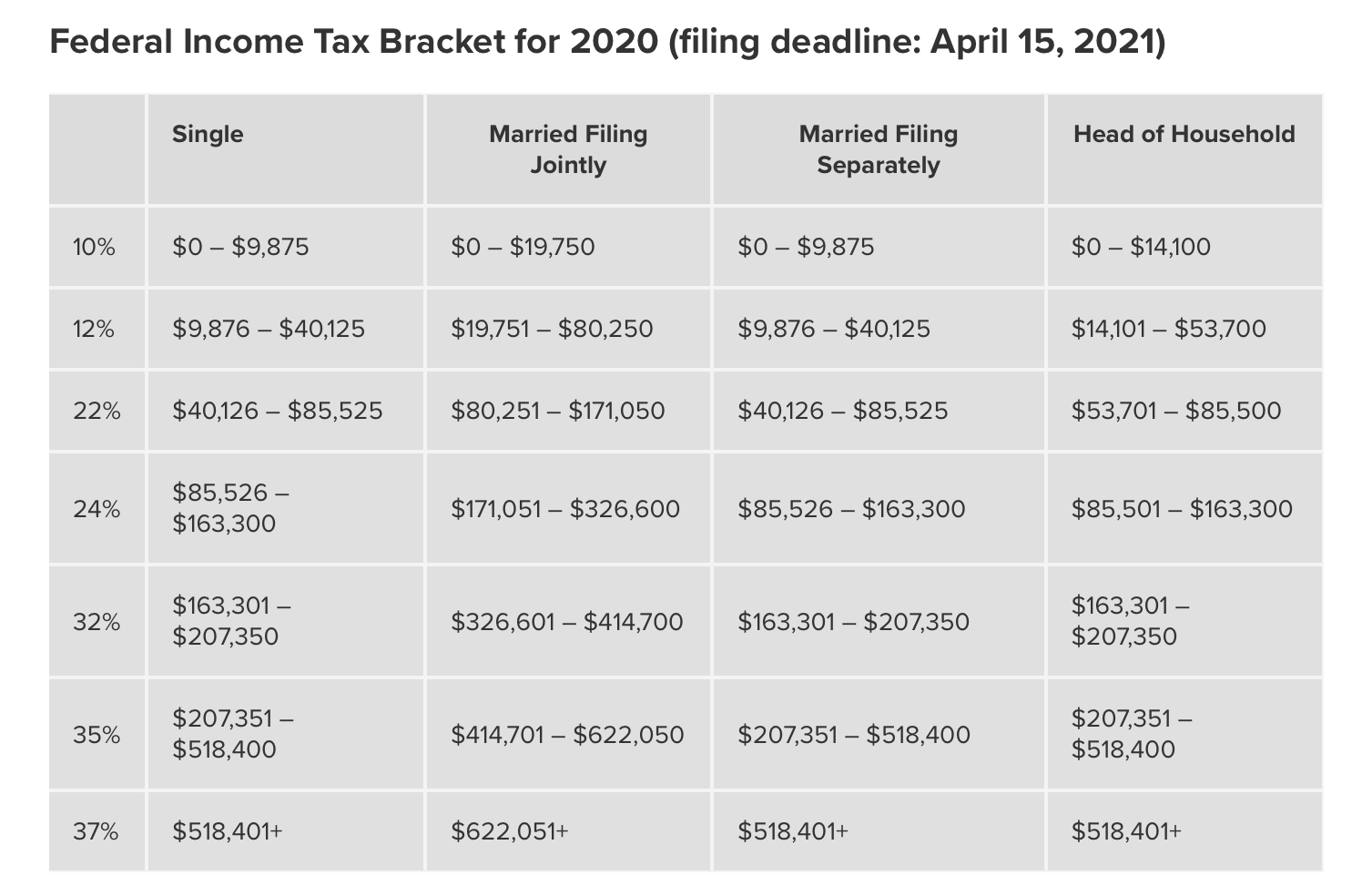
None of the above benefits are free. They're paid for by taxes. You might assume your tax bills would be devastatingly high with all these generous programs (and they can be high for the well-off), but they're quite manageable for the average earner. For someone who earns around $40,000, like myself, I’ll be paying a Scottish income tax rate of 21%. In the U.S., it’d be 22%. in other words, I’d pay MORE in the U.S. It must be said that if you’re a Scot who earns more than $57,000, then you will have higher taxes than an American who earns that same income.
U.S. income tax rate 2020
Scottish income tax rate 2020
Evil #12: Prosperity for all
The World Economic Forum publishes an annual list of countries, ranking them on "global competitiveness.” Check out the Top-50 countries on this list (page xiii). These Top-50 are dominated by all of these European socialist countries. Or consider “social mobility,” which describes the ease at which an individual can climb the socio-economic ladder. According to the World Economic Forum, the most mobile countries are European social democracies. The U.S. is ranked at #27.
World Economic Forum, social mobility rankings
Honorable mention evils
There are probably so many benefits that I'm unaware of. There are no doubt benefits for the disabled, kids with learning disorders, senior citizens, and for arts funding. My sister in law, who works in Luxembourg, tells me that she gets roughly $700 a month in child payments for her two kids, plus additional money for school supplies. Child care is free for children between 2-6. Full pay was offered to her for four months during the pandemic lockdown. Fifty free face masks were provided to her family, plus vouchers to stay in a hotel to perk up the tourism industry. There are probably a thousand other small things like this that are under my radar.
***
All nonsense aside, I've experienced and benefited from at least six of these benefits in just my two years of on-again-off-again living in Scotland. There is so much I miss about the U.S.: the wildlife, the wild forests, the toilets that flush, the everyday cheeriness of its people, and my social connections. But there are times when I think: Why would I ever go back?
Health care, maternity leave, free education, a right to roam: these are serious life-enhancing benefits that have, for me, reduced stress and anxiety. They’ve made life easier and better. I’d think twice before giving them up.