Thursday, September 5, 2013

The way to Wigtown


So I'm off on an adventure. This one, to travel the British Isles for 45 days.

A while back, I was invited to speak at the Wigtown Book Festival—Scotland's biggest book festival that takes place in the town of Galloway between September 27 - October 6. Having never been to Europe, and having never met my Scottish kin (three uncles, aunts, and innumerable cousins), I was eager to pounce on the opportunity, especially after the festival offered to pay for my flight.

I'll be giving three talks at the festival: (1) the first of which takes place on an adventure walk to a mysterious castle with fellow author Robert Twigger; (2) a panel discussion on the relevance of Thoreau; and (3) a reading of my book Walden on Wheels—a series of duties that I am, ultimately,  unprepared for and intimidated by.

Tomorrow I set off for London. I'll spend two days in London, three in Paris, several more in England, a couple of days in Wales, and then my larger Scottish journey: a 10-day, 178-mile hike across the Highlands; a family-finding mission in Motherwell; and then the Wigtown book festival. Finally, a ferry to Ireland where I'll romp across the island for ten days before flying back across the Atlantic. I plan on hiking a lot of hills, eating a lot of fish, drinking a lot of beer, and looking to the right before crossing roads.

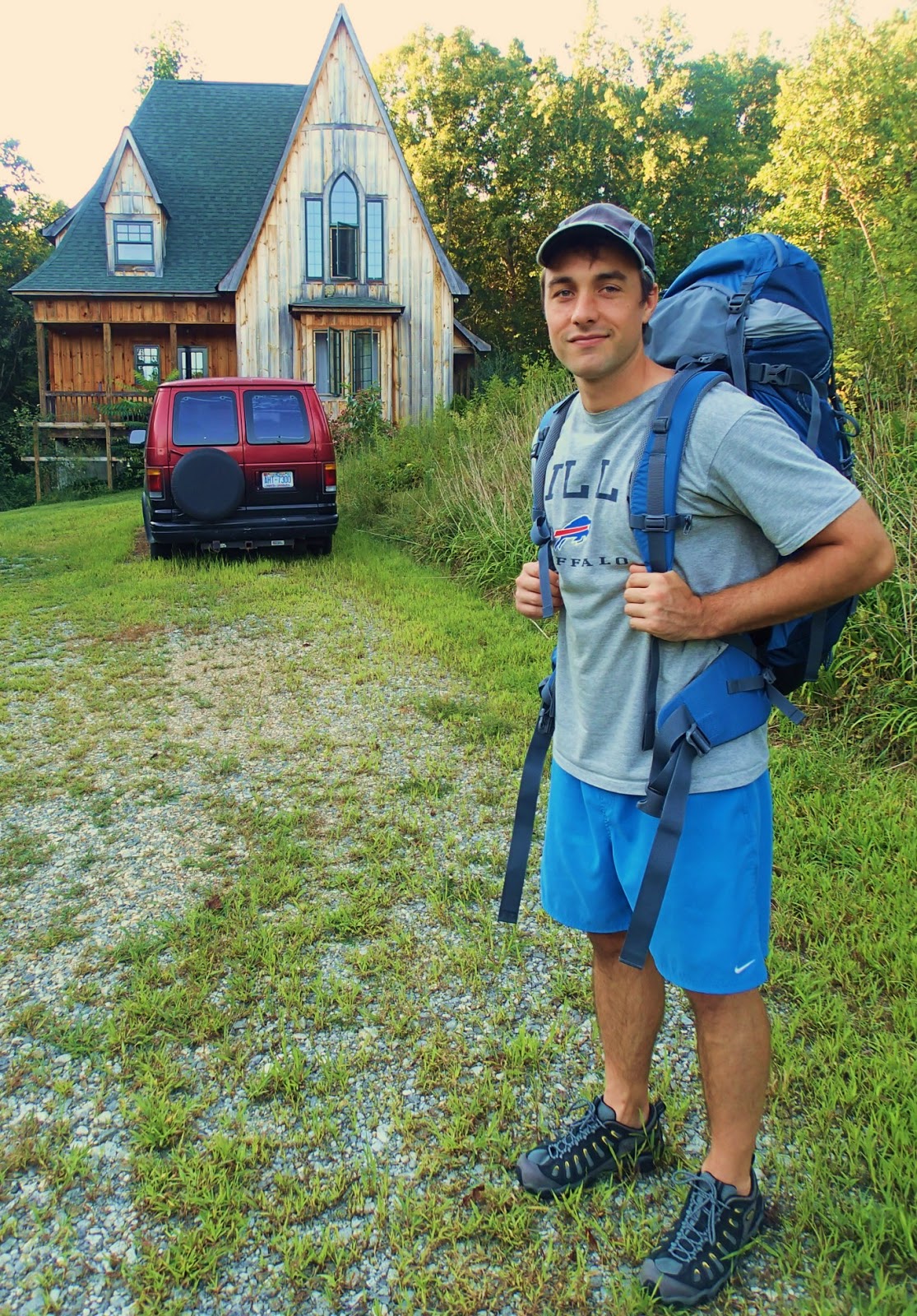
I'll have with me my trusty set of trekking poles, plus a 40-pound backpack that contains a good set of rain gear, two sets of clothes, and my iPad and fancy camera for blogging fun. Ah, the pre-adventure jitters!—if only every night we were kept awake with the delirious anticipation of tomorrow!

Friday, August 9, 2013

On being famous


Walden on Wheels got off to a slow start. Despite a few well-placed op-eds in the New York Times and Chronicle of Higher Ed., the interview requests—that are crucial for a fledgling book, I’m told—never came. I had a few radio station interviews lined up, but many were poorly established operations based in some of the most remote parts of the country. One radio host didn’t even have an assistant to answer company phone calls, so he took them while he was on the air. I called up the day before the interview to make sure the sound quality of my cell phone was up to snuff, and while repeating the words, “test, test, test,” I had the odd feeling that I was live on the air.

“Am I on the air?” I asked.

“Yep,” he said. I would have felt embarrassed, but it occurred to me that there probably weren’t any listeners.

Honestly, though, I didn’t care too much about how many interviews I was getting or how many copies of the book were being sold. I’d already been paid for writing the book, so selling 100 or 100,000 copies would make little difference. I worked hard on the above-mentioned op-eds, and I did my best at every interview I got, so I guess I just felt I did my part, and if the book was going to sell, it really wasn’t up to me anymore, but more amorphous, uncontrollable things like “fate” or laissez-faire economics. Plus, I was just content to have published a book, which seemed like such an implausible, far-fetched endeavor two years before. 

I took a flight to Buffalo, NY to visit with family for the first time in a year and a half, and from my boyhood bedroom I did a few more phone and email interviews. Life, though, continued on as normal. I kept working on book #2, I took a nightly jog to the Niagara River, and I made a fruit and yogurt smoothie for myself each morning. For a couple of days, I became the family laughingstock when I replaced the cheap $2 gallon of skim milk (a family staple) with a gallon of organic. Neighbors were called up. I heard some ecstatic shriek from my mom when she was on the phone with my aunt. “Organic? What is your father going to say?” my mom said to me, all smiles and wild cackles. Upon opening the fridge, my father stared at the white jug with a red “No antibiotics and toxic pesticides used” label with a confused, slightly pained look on his face, as if he was trying to figure out if he was the subject of a devious prank. “You bought organic?!” he cried, leery of the new substance he was holding, as if I’d suggested he amend his mug of tea and fill his cereal bowl with turkey grease.

Meanwhile, there were rumors that my aunt needed some dehumidifiers moved in her basement. The transportation of moderately heavy appliances hardly seemed like a daunting task, but our family has a secret PTSD-based fear of my aunt’s basement, so the place, in our memories, is not merely a damp storage facility, but a bunker in which we harrowingly endured hours of exploding shells. Years before, my mom, dad, brother and I helped my aunt haul boxes of clothes, antiques, and holiday ornaments from her apartment to her new home. The boxes went straight from the apartment attic, where they were never opened, to her basement, where they never would be opened. My brother and I, curious about what exactly we’d been hauling for the past ten hours, broke open a box to see what was inside. We looked at each other with mystified expressions when we pulled out a faded teal dress from the 1970s with shoulder pads. “Maine, are you ever even going to wear this again?” I asked. She pretended not to hear the question as she placed a cardboard box on top of another. After three days of box hauling, the basement was like a mini city. When you walked through it, you felt like Godzilla waddling through narrow alleyways brushing shoulders against towering skyscrapers. Consequently, my father, who doesn't come across to anyone as "morbid," has more than a few times hinted that he aims to be the first in the family “to go,” so the burden of moving the boxes again doesn’t have to fall on his sore shoulders.

My brother would end up helping my aunt move the dehumidifiers and advising her on how to sell her couches on Craigslist. “You gotta know how to play the game,” he said annoyed, as the older members of our family always seem to lag woefully behind the rest of the world on the march to technological sophistication.  

“The game?” I said. “What, are you selling heroin in East Baltimore?” (The phrase struck me as ridiculous because I’d just finished watching HBO’s The Wire, in which drug dealers refer to “the game” as the bloody drug war between gangs—not gypping some sap out of an extra thirty bucks over an old couch.)

Over the course of a couple of weeks, several business media outlets—many of which leaned conservative—became interested in my book. I received a glowing review in the Wall Street Journal, followed by features on websites like Bloomberg, Business Insider, and Mike Huckabee’s website. Three different Fox News television shows asked me to come on.

Things seriously took off when a Business Insider interview was put up on Yahoo’s homepage, once again advertising my patchy chest hair and mouth full of food to the world at large.


The article generated an astounding 9,500 comments, and, within three days, I had 1,200 Facebook friend requests, my book shot up to the 109th bestseller on Amazon, and I had close to 400 messages and emails from complete strangers. Good Morning America was frantically trying to get in touch with me, seeking an exclusive interview, sending me emails all morning while I slept in past 10 a.m. When no one picked up at home, they desperately called my neighbors. These things, I’ve learned, often fall through, so I was never on Good Morning America, but I was invited onto CBS This Morning.

My publishing company flew me to NYC and put me up in a hotel for a night. In the morning, I was picked up in a car and taken to CBS’s studios. I met my publicist for the first time, who didn’t seem to mind my complete silence on the car ride over, as I played out in my head a host of worst-case scenarios, which ranged from “What if I have a brain freeze?” to “What if I crap my pants?”

At the studio, a woman dabbed makeup on my face and combed my hair while Gayle King very charmingly went over all the notes she took when reading my book. Elizabeth Dole, another guest, was backstage with me, and I was trying to avoid eye-contact with her because I’d forgotten if she was still a senator of North Carolina, and I didn’t know if I should address her as “Mrs. Dole” or “Senator Dole.” The subject of “Duke” somehow came up among other people in the room, and despite having my back turned to all parties, one of the producers mentioned that I was a graduate of the school as well. “Well, hello, it’s nice to meet you,” said the esteemed guest. I didn’t want to say something as uncouth as “It’s nice to meet YOU, too,” so I figured I’d kind of just mumble “Senator” hoping that, if she expected to hear Senator, she would, and if she didn’t, she’d just write it off as a speech impediment.

“Hello senna Dole,” I said. “It’s nice to meet you, too.”

For the most part, the interview, only a few minutes long, went well. I stumbled on one (somewhat sprawling) question, but muscled through the brain freeze. Gayle King threw some softballs to me, which I was able to manage with some adrenaline-fueled charm.

Fox News also asked me to be on, and with a great deal of reluctance, I agreed. As David advised, this was my opportunity to “throw a love bomb behind enemy lines,” and I justified it was okay since my harmless message about living simply and paying off debt responsibly deserved as big an audience as it could get.

The next day, I got an email from Steve, a producer of The Tonight Show with Jay Leno, who told me he had a Waldenesque cabin in Idaho and that he identified with my story. We had a “pre-pre-interview” on the phone, during which a producer feels the interviewee out and determines if he/she can supply semi-articulate answers. I managed well, and he invited me to Burbank.

My dad is a big Leno fan, so he and my mom took time off of work and flew in on a separate plane. I spent the evening at the hotel gym working out for four hours. I spent three miles on the treadmill, five miles on the bike, and completed full shoulder, bicep, and pectoral workouts. For the past week, I’d had a borderline eating disorder, as I tried to shed every trace of flab, but also to destroy all nervous energy with intense exercise and an austere diet.

On the morning of the show, my publicist and I met with two producers, who told me about how the interview would go down. Steve, who, I gathered, was having second thoughts about me, said, “Be charismatic, even if that’s not how you usually are.”

I spent the next four hours in the gym, thoroughly scrubbed myself down in the shower, and shaved. A driver took us all to the studio, where I had a dressing room with my name on it, plus trays of veggies and fruit.

Perhaps because of my dizzying workouts, I felt an odd sense of calm. My mom, who said she might “throw up,” was visibly nervous and just barely holding it together. We were talking with one of the show’s writers, when my dad called out, “Hey Jay!” as if Jay, walking down the hallway, was selling bags of peanuts at a ball game. Jay came in and spent about five minutes talking with us, but mostly with my father, who’s Scottish, like Jay’s mother. I was struck with my father’s carefree comportment, leaning back in the sofa, shooting the shit with a nationally-recognized celebrity.

“How old are you?” asked Jay.

“I’m 63,” my dad said.

“Ah, same as me,” said Jay.

“Yeah, well I’m not retiring early.”

My parents were ushered off to their seats in the audience and I was taken to the makeup studio and given a new pair of pants because mine were inexcusably wrinkled.

Steve Carrell was the first guest, and I was watching the show from a television screen in my dressing room, still oddly serene until the second half of his interview was coming to a close, which meant that I’d soon be on.

They took me behind the stage, where I’d wait to be called out. The band was rocking. The crowd was energized. A lady looked at me and said, “Steve really got them going.”

In moments, I’d be called out onto an iconic stage on one of the most iconic shows—a fixture of American culture. How did I feel? I was pumped. As the band played on, I found myself dancing while shadow-boxing, oozing with energy that desperately needed a vessel into which it could be salvaged.

I still wasn’t even that nervous. Part of it was because I was well prepared and that I’d had my “first time” already. But part of it was just that I didn’t care. I am going to be on TV—so what? Whatever I put in books, on TV, on radio, on this blog doesn’t matter—it doesn’t change what I am inside. How people perceive me doesn't change how I perceive myself. While I certainly didn’t want to crap my pants and be a viral embarrassment, truth be told, I just didn’t care what anybody thought. If Joe and Susan in New Mexico think I'm a dweeb, how does that in the slightest affect me? And while I’d very soon be in the national spotlight, I knew I was a mere comet pebble in a vast TV galaxy—one voice drowned out by millions of others on thousands of channels.

Between a last second pep talk, in which I deceived myself into believing I was up to the task, and a reminder to, as Steve the producer said, just have fun, I walked out onto the stage with something bordering on confidence.

The next five minutes passed as if they were seconds. Afterward, I leaned back in my chair, feeling awfully content with myself. Steve Carrell introduced himself and told me my story would make for a good movie.

That night, I received another flurry of emails, including one from “Erika," who called me “realllly sexy,” attached a suggestive picture of herself, and proposed that I “might have an easier time getting some in Miami than you did in your van....”


Turned off a bit with her forwardness and leery of getting entrapped in a Manti Te’o-like scandal, I politely turned down Erika, who turned out to be one of my male friends in New York screwing with me.

This was my third fifteen minutes of fame in the past few years, and I was prepared to handle it. In the past, I'd been transfixed with having my name listed on national publications, with receiving emails from mysterious strangers, and always wondering what other changes this fame will bring me. There's a high high when you're on top, and a low low when your popularity dissolves. This time, though, I was just kind of nonchalant about the whole thing, feeling the sort of breezy contentment that one basks in after a good, hard day's worth of work.

I've learned there really are no substantial “changes.” Though inundated with new Facebook friends, there are no new friends. There is no new money. No new things. No one recognizes you on the street. In the media ocean, you are a big swell that lasts for a moment, and you're dashed into a trillion indistinguishable bits on the shore the next. It may in fact present some new opportunities, it may improve your chances of getting a second book deal, but it doesn’t change who you are. How can you live for thirty years and, one day, just magically change into someone else, with different hobbies, values, and friends? You can’t. And having just spent a month visiting old friends and family, it was so clear to me that people just don't change, sometimes for the worse, sometimes the better. Myself included.

While my friends worried that I'd be swept up and altered by this new wave of fame, I knew better. At the height of my "fame," with Leno on the tube, I wasn't at some throbbing club, rubbing shoulders with famous people, or having wild sex with the likes of Erika, but laying in my underwear on my hotel bed, with the tray of fruit and veggies I'd pilfered from NBC resting on my stomach, watching another episode of The Wire. 


Thursday, May 23, 2013

How to walk across the country (Part IV: Gear)

Previous installments: Part #1: How to create maps / Part #2: How to plan for food / Part #3: How to pack and ship your food


I haven’t been looking forward to writing this installment to the series because I didn’t want to add up the outrageous amount of money I spent on gear.

Before my trip, I received the first check for my book, making this the first time in my life I had a good chunk of money in the bank. So, between wanting to buy the best gear for my trip and feeling okay about treating myself to gear I’d probably use over and over again, I wasn’t exactly frugal when making my selections.

I was seeking top quality, light-weight gear. I wanted to embrace “ultralight” backpacking as much as I reasonably could. Over the course of the trip, though, my opinion on ultralight backpacking would change. But I’ll get to that later.

Clothes

Item
Weight
Price
Wool Socks (carried two pairs)
7 oz
$52
Patagonia Nylon Pants
10.7 oz
already owned
Synthetic boxer shorts (carried 2 pairs)
5.4 oz
$40
Polyester undershirt
8.4 oz
$60
Wool overshirt
10.7 oz
$105
Thermal shirt
7.2 oz
$34.50
Thermal pants
5.4 oz
already owned
Rain pants
9.6 oz
$34
Golite Malpais Trinity rain jacket
7 oz
$80
Golite Cady Synthetic Jacket
15 oz
$69
Gaiters
8 oz
$55
Gloves
7.4 oz
$85
Winter Hat
6 oz
$30
Beanie
2 oz
$30
Facemask
1.8 oz
$25
Baseball cap
2.2 oz
already owned
Orange vest
6.8 oz
$10
Total
2 lb 6 oz (on person)
5 lb 2 oz (packed)
7 lb 8 oz (total)
$709

I began the trip with a pair of nylon pants, a light wool underlayer shirt, a medium-light top layer shirt, two pairs of socks, two pairs of boxer shorts, a baseball cap, winter hat, gloves, rain pants, rain jacket, and a light jacket. This was a fairly minimal approach to carrying clothes on a backpacking trip, and they would have proved enough for a summer excursion, but once winter came I had Josh (my base camp) buy and ship me more items, including another wool shirt, gaiters (for trudging through the snow), a facemask, and beanie.

Three things I learned about clothes:

1.) You only need one pair of pants. If my pants got soaked during the day, I wore my thermal bottoms at night, which kept me warm. In the morning, I’d put on my wet pants, which was unpleasant, but better than having to carry another pair of pants.

2.) Bring layers; don’t bring a heavy jacket. While hiking, I was constantly peeling off or putting on clothes to maintain comfort. This is possible with layers; it’s not with a big parka.

3.) I always thought recreationalists were lame for paying so much attention to their gear, especially their fabric type. But that stuff matters, especially fabric. Cotton does not handle moisture well; it’s very slow to dry. You’re better off wearing synthetic materials, or, better yet, merino wool, which breathes nicely, weighs little, and dries out very quickly.

Those Patagonia nylon pants were amazing. They were old when I began the trip with them, but they held up for the whole trip and are still very usable. I probably had to stitch them up at least twenty times because of barbed wire incidents, though.
My GoLite rain jacket was incredibly disappointing. It was very expensive, yet it failed to keep my clothes dry. Also, the seams started to come apart, which was especially disappointing because I'd hardly had to wear the jacket on account of it being such a dry fall/winter. 

Seam in jacket tearing. 

Thermal underwear was infrequently worn, but was absolutely critical on days when I had to walk/sleep in extreme cold.

The GoLite synthetic jacket worked admirably. It was a good sized jacket: not too big, and thin enough to fit underneath my rain jacket. 

I've had this REI hat since May 2007, and it's still in great shape. 

Shoes

Item
Weight
Price
Vasque hiking boots
3 lb
$80
La Sportiva Raptor trail running shoe
12.3 oz
$85
Total
3 lb
$165

I began my hike with some La Sportiva trail running shoes, which were very light. I’d end the trip, though, wearing regular-sized hiking boots. Ultralighters make a good case about wearing lightweight shoes. In The UltimateHiker’s Gear Guide, Andrew Skurka says, “Five to six times as much energy is required to move weight on the feet as weight on the back, so wearing two pound shoes—instead of four-pound boots—is equivalent to lightening up your pack by 10 or 12 pounds.” That’s persuasive, but I don’t think I’ll ever wear lightweight trail-running shoes on a big hike again. My trail runners did nothing to keep out moisture, dirt, and debris. After a one-minute walk in dewy grass, my socks would be soaked. Between the dirt and water, my socks would turn hard and crusty, causing innumerable foot problems. Sure, your feet will get moist from sweat in a pair of hiking boots, too, but that’s different than walking in dirty, soaking-wet socks for the entire day.

These Vasque boots performed well. Even though feet sweat in waterproof boots, they keep out dirt and debris better than trail running shoes. 

Throwing out my trail-runners. Good riddance. 

Protection

Item
Weight
Price
Bear Spray and Velcro holder
13 oz
$68
Jackknife
4 oz
$50
Total
1 lb 1 oz
$118

Northern Alberta is black bear country, so I figured I needed a canister of bear spray. Plus, I figured it could serve as a deterrent against people or other animals. I also kept a jackknife in my pocket at all times for the same reasons. In the end, I’d never “use” either, but they were worth their weight, as possessing some weapon reduced anxiety in moments of danger. 

Bear spray, usually kept within reach

This Gerber jackknife was a peice of crap. Toward the end of my trip, it would constantly open up in pocket without me asking it to, which could have resulted in a gruesome injury.
Tents

Item
Weight
Price
Tarptent (the “Notch”)
1 lb 10 oz
$271
Mountain Hardware EV 2 Tent
4 lb 5 oz
$660
Total
4 lb 5 oz
$931

I began my trip with the lightweight “Notch” tarptent, which saves weight by using two trekking poles to hold the tent up. The Notch, as you can see, is very light, and, for the most part, was a good shelter. There were about three nights, though, when the Notch collapsed on me during windstorms. The stakes the Notch came were weak and eventually broke, leaving me in some dangerous situations when the tent would collapse in windy and rainy weather. Around the third time it collapsed on me, it was starting to turn to winter, and I was sick of worrying about my shelter collapsing on me in a snowstorm, so I bought a four-season, two-person tent—the Mountain Hardware EV 2—which was excellent with dealing with the wind, and it probably kept me alive when I was stuck in an ice storm in a South Dakota cow pasture. I’d still recommend the Notch, but only if you’ll be traveling in spring/summer/fall weather, and if you aren't going to be vulnerable to the wind (i.e. forested trails like the Appalachian Trail).

Notch: good, lightweight tent with some shortcomings

Notch tent held up by my trekking poles

This Mountain Hardware tent was excellent and roomy. It kept me safe, so it was worth carrying, even if it was four times heavier than my previous tent. 
Sleeping bags

Item
Weight
Price
Western Mountaineering Antelope MF (rated 5F)
2 lb. 7 oz
$530
Western Mountaineering Summerlite  (rated 32F)
1 lb. 3 oz
$371
Total
2 lb 7 oz
$901

Again, to save weight, I purchased some lightweight goose down sleeping bags. Both of these were excellent, but the 32 F-rated bag didn’t keep me warm enough some nights early on, so I had to ship it home and spend a pretty penny to get a 5 F-rated bag. It was painful to spend so much money on sleeping bags, but they were well worth it.

Western Mountaineering Antelope MF. It's rated "five degrees F," but to remain warm in it at that temperature, you must be wearing pretty much all your clothes to bed. 

Large essentials

Item
Weight
Price
Deuter Act Zero backpack
3 lb 7 oz
$179
Foam pad
8 oz
$20
Black Diamond Z-pole 
11 oz
$99
Total
4 lb 10 oz
$298

The Act Zero 65 liter backpack was, for the most part, a good backpack. I wish I could have carried a lighter bag, but with some of my heavy electronics, the lighter bags I tried out were bursting at the seams with all my stuff in them. The Act Zero held it all well. When I sat on the pack, though, I broke the two aluminum stays inside, and the broken shards began cutting through the pack fabric. I was still able to use the pack all the way to the end of my trip, but it was in serious need of repair if it was going to be used again. I mailed it to Deuter for repairs and they very kindly sent me a new pack, free of charge. A+ for customer service.

The foam pad was critical in keeping my body off the cold ground. It was only about 4 feet long, so I used it for my head, torso, and hips, and I laid my legs and feet on top of my backpack.

The trekking poles were vital, and, in the end, probably took a lot of stress off my legs, allowing me to walk a little bit longer and farther each day, with more comfort. One of my Z-poles snapped for no good reason only 500 miles into my trip (I was walking on a sidewalk at the time), so I don’t recommend this brand. I was able to repair it with some plastic tubing and duct tape I got at a hardware store.

Deuter pack, and most other gear purchased at REI

$20 foam pad bought at REI

Small essentials

Item
Weight
Price
Stuff sacks (carried three)
2.7 oz
$50
Lip balm
.4 oz
$2.25
Sunscreen
1.3 oz
$3
Chlorine Dioxide Water treatment (12 bottles)
3.2 oz (only two bottles)
$59

Pot
6 oz
Already owned
Catfood Stove and windscreen
.6 oz
Cost included in food section
Three platypus water bottles
1 oz each (3 oz total)
Already owned
Maps
1 oz
Cost included in map section
Med kit plus foot creams
11.7 oz
Already owned
Wrist watch
1.6 oz
Already owned
Matchbook
.3 oz
Already owned
Headlamp
3.2 oz
Already owned
Sewing needle and thread
1 oz
Already owned
Compass
1 oz
Already owned
Notepad and pens
2 oz
Already owned
Garbage bag
1 oz
Cost included in food section
Toothpaste, tooth brush, floss
3 oz
Already owned
Total
2 lb 9 oz
$114.25

I could hardly live without any of the above. I used my Black Diamond headlamp almost every night. I’ve had it for three years now, and it still works great. (I’d originally paid about $45 for it).  The lip balm and sunscreen were critical early on, but once my skin and lips adjusted to being in the sun all day long, I didn’t need them anymore. The Chlorine Dioxide is the preferred “ultralight” method of purifying water, and it worked fine for me. I never got sick from drinking out of cow ponds, plus the drops do not distort the taste. The platypus water bottles were very light, but after 750 miles they started to fall apart, and I had to replace them with heavy aluminum water bottles. The wrist watch was also critical. With it, I could plan out when I should set up camp, which wasn’t always easy on overcast days. The compass was arguably my most important item of all. I’ve learned one thing about my instinctual navigation skills: I don’t have any. I learned to trust the compass more than myself.


Thread and needle were essential for sewing up innumerable pants tears because of barbed wire accidents. 
My med kit was used frequently for foot and shin problems. Toe nail scissors were useful for cutting nails and cutting sewing thread. I carried good skin-like bandaids and a lot of rubbing alcohol for cleaning my ravaged feet. Clothing pins were used to lance blisters.
The Canesten and Hyrdocortisone Cream were essential in fighting my athlete's foot problems. 

Can't live without a headlamp.

These drops are so much lighter than carrying a clunky water pump filter.

An ultralighter trick I like: the catfood canister alcohol stove worked wonderfully and weighed far less than traditional backpacking stoves.

Playpus collapsible bottles worked nicely, but fell apart at the end. Good for short trips, but I wouldn't trust them on giant excursions again.

Electronics

Item
Weight
Price
Olympus Tough camera and charger
1 lb 6 oz
$400
Extra camera batteries
1.5 oz
$23
Mini tripod
3.6 oz
Already owned
iPad 3 and cover
1 lb 13 oz
$829 + $40=$869
iPad connection kit and charger
4 oz
$29
Pelican case
2 lb
$50
Earbuds
.5 oz
$10
Blue Tooth Keyboard
10.7 oz
$69
Solar charger
1 lb 4 oz
$190
Verizon cellular data plan for iPad internet connection
0
$30/month ($180 in total)
eBooks (13)
0
$173
Pre-paid cell phone
2.5 oz
Already owned
Total
7 lb 9.5  oz
$1,993

Sharing my trip with others was important to me, so I had to figure out how I could blog after a day's walk. The obvious answer was an iPad, which has a big battery and thus doesn't need to be charged much. The iPad, also, would perform other useful functions.

Because I purchased a Verizon cellular data plan for the iPad, I was able to connect to the Internet in some of the most remote cow pastures across The Heartland. Using the iPad, I was able to edit a story for a magazine I was writing an article for, edit my book with the Adobe app, and I could craft blog entries using the Blogsy App. I edited my films using iMovie, kept up-to-date on emails, and it was the luxury of luxuries to find a place with a good Wi-Fi connection so I could watch an episode of Downton Abbey with a friend’s Hulu Plus account. One of the biggest perks was having access to the weather forecast.I could look at the five-day forecast and get an idea of what sort of weather I’d be walking in. If I knew it was going to rain, I’d probably pack my gear more carefully and make sure my rain suit was easily retrievable. 

Also, the Google map app was an invaluable navigational tool. Even if there was no Wi-Fi or Verizon tower nearby, the iPad would still show me where I was on the map nine out of ten times. This was hugely helpful when I didn’t know where I was in remote areas. And when I was in populated areas, and needed to find a quiet place to set up my tent, I’d look at the Google satellite map and I’d find a forest where I could verify I wouldn’t be near anyone’s home. 

Lastly, it served as my book-reading device with the Kindle app. I knew that, because of the time of year I was hiking in, the days would be short and the nights long, so I wanted to make sure I had a lot of reading material. Though the iPad and accessories weighed a ton, it did allow me to bring as many books as I liked, which would weigh nothing. (The wonders of technology!) For someone who wants a back-to-nature experience on a trail, or cares about carrying the lightest possible load, I would suggest not bringing an iPad, a solar charger, and all its accessories (6 lb), as carrying that extra weight was an enormous sacrifice. Instead, I’d recommend getting a lightweight Kindle device (6 oz), which claims it can hold a battery charge for a whole month.

The solar charger was mostly a wasted investment. The battery charged really slowly (one full day in the sun only filled up 1/3rd of the battery), and because I was throwing my pack over barbed wire fences all day, I was constantly afraid I’d shatter the solar panel, which I’d strapped to the top of my pack. I’d eventually mail the solar panel home because I wasn’t using it. The battery it came with, however, was quite useful. I could plug that into sockets at restaurants and then charge up my iPad at night when it ran low.

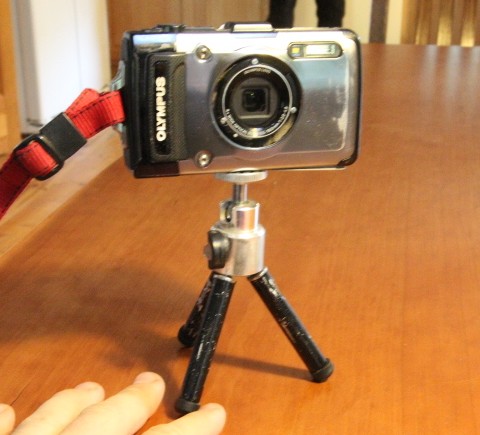
The Olympus Tough camera was exceptional. It’s waterproof and shockproof, so I wasn’t too worried about damaging it. The picture quality was good. It was compact and could easily fit into my back pocket. The one (major) negative was with capturing movies. While it took excellent footage, there was always a strange “clicking” sound in the background that you could hear when watching it later on.

Pelican case was excellent. I threw my pack over fences many times a day and never worried about damaging the iPad. Also the Blue Tooth keyboard made typing blog entries easy. I couldn't have written nearly as well by using the basic touch-screen option. 

Accessories fit underneath keyboard. 

Mounting the iPad.


Reading books on my Kindle app was an every-night exercise. 

This pre-paid phone is a piece of crap and only works properly in populated areas. If I could have done it again, I would have tried to bring a better phone. 

The portable solar charger was disappointing, as it takes a lot of sun to charge the battery. The battery, though, was very useful, because I could charge it in sockets and charge my iPad with it at night.

Olympus TG-1 Tough camera gets a big thumb's up from me. 

This mini tri-pod was useful for filming and self-timed portraits. 

Total weight

On-person weight
Packed weight
Food weight
Water weight
Total weight
5 lb 6 oz
27 lb 11.5 oz
10 lb (five day’s worth)
2 lb
45 lb 1.5 oz


Lastly, some words on trying to be an “ultralighter”…

In the end, I became far more skeptical of some ultralight philosophies. The gear that failed me was all “ultralight.” My $80 raincoat didn’t stop the rain from soaking me, and the seams started to break, despite only wearing it for 5 percent of my trip. My lightweight trail-running shoes gave me foot problems, my tarp-tent collapsed on me in heavy winds, my collapsible water bottles leaked, and my lightweight trekking poles snapped. But this doesn’t mean all ultralight gear and methods are “wrong.” I loved my catfood canister stove, and I now prefer chlorine dioxide water drops to a clunky water filter. My lightweight sleeping bags are great.

For weekend or week-long hiking trips, I think the hiker would benefit from most any ultralight gear. But for long trips, that will last months, you might want to seek heavier, more durable gear that can withstand the rigors of a full-fledged journey.

Cost of 2012-13 Keystone XL Expedition….

Maps: $350
Food: $998
Shipping packages: $406
Gear: $5,220

Total: $6,983 (Ahhh!)

Other installments
1. How to map
2. How to organize food
3. How to pack and ship food